PCA (Principle, Component, Analysis)
-
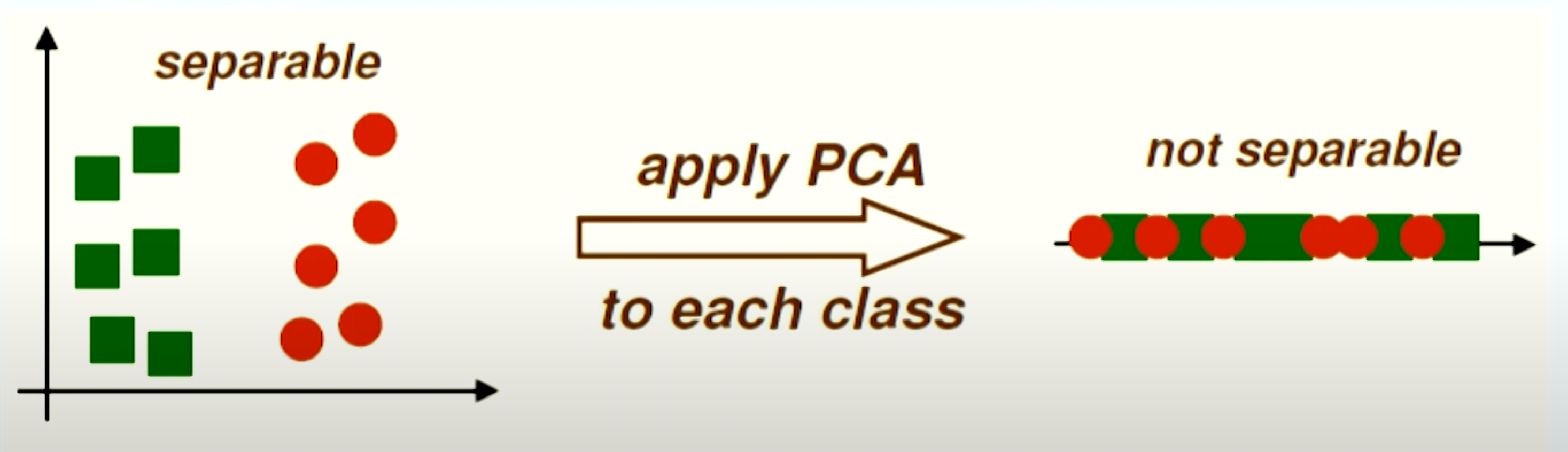
PCA is a method used to reduce the number of variables in a dataset while preserving as much information as possible.
-
PCA is an unsupervised learning algorithm.
-
PCA is used to reduce the dimensionality of a dataset.
-
PCA is used to identify patterns in data and detect the correlation between variables.
-
PCA is used to identify the most important features in a dataset.
-
PCA is used to reduce the number of features in a dataset.
Definition we need to know
-
Mean: The average value of a dataset.
-
Variance: The spread of a dataset.
-
Covariance: The relationship between two variables.
-
Standard deviation: The square root of the variance.
-
Correlation: The relationship between two variables.
-
Eigenvector: A vector that does not change its direction when a linear transformation is applied.
-
Eigenvalue: A scalar that represents the magnitude of an eigenvector.
-
Projection: The transformation of a dataset onto a lower-dimensional subspace.
-
Orthogonal: Two vectors are orthogonal if their dot product is zero.
-
Linear transformation: A transformation that preserves the linearity of a dataset.
-
Covariance matrix: A matrix that contains the covariance between each pair of variables in a dataset.
-
The principle components are the eigenvectors of the covariance matrix of the data.
- First principle component is the eigenvector with the highest eigenvalue of the covariance matrix.
- If we want to transform a n-dimensional dataset into a k-dimensional dataset, we can select the top k eigenvectors of the covariance matrix.
- The eigenvectors of the covariance matrix are the directions of maximum variance in the data.
Steps to perform PCA
- Standardize the data.
- Calculate the covariance matrix.
- Calculate the eigenvectors and eigenvalues of the covariance matrix.
- Sort the eigenvectors by decreasing eigenvalues and choose the top k eigenvectors.
- Construct the projection matrix W from the selected k eigenvectors.
- Transform the original dataset X via W to obtain a k-dimensional feature subspace Y.
- The new dataset Y can be used to train a machine learning model.
- The PCA algorithm can be used to reduce the number of features in a dataset.
Tools to implement PCA
- sklearn.decompositon can be used to directly apply PCA algorithm.
# Direct Implementation
from sklearn.decomposition import PCA
pca=PCA(n_components=1)
pca.fit(X_meaned)
Xr = pca.transform(X_meaned)
print(Xr)
Example
LDA (Linear Discriminant Analysis)
-
LDA is a supervised learning algorithm.
-
LDA is used to reduce the dimensionality of a dataset.
-
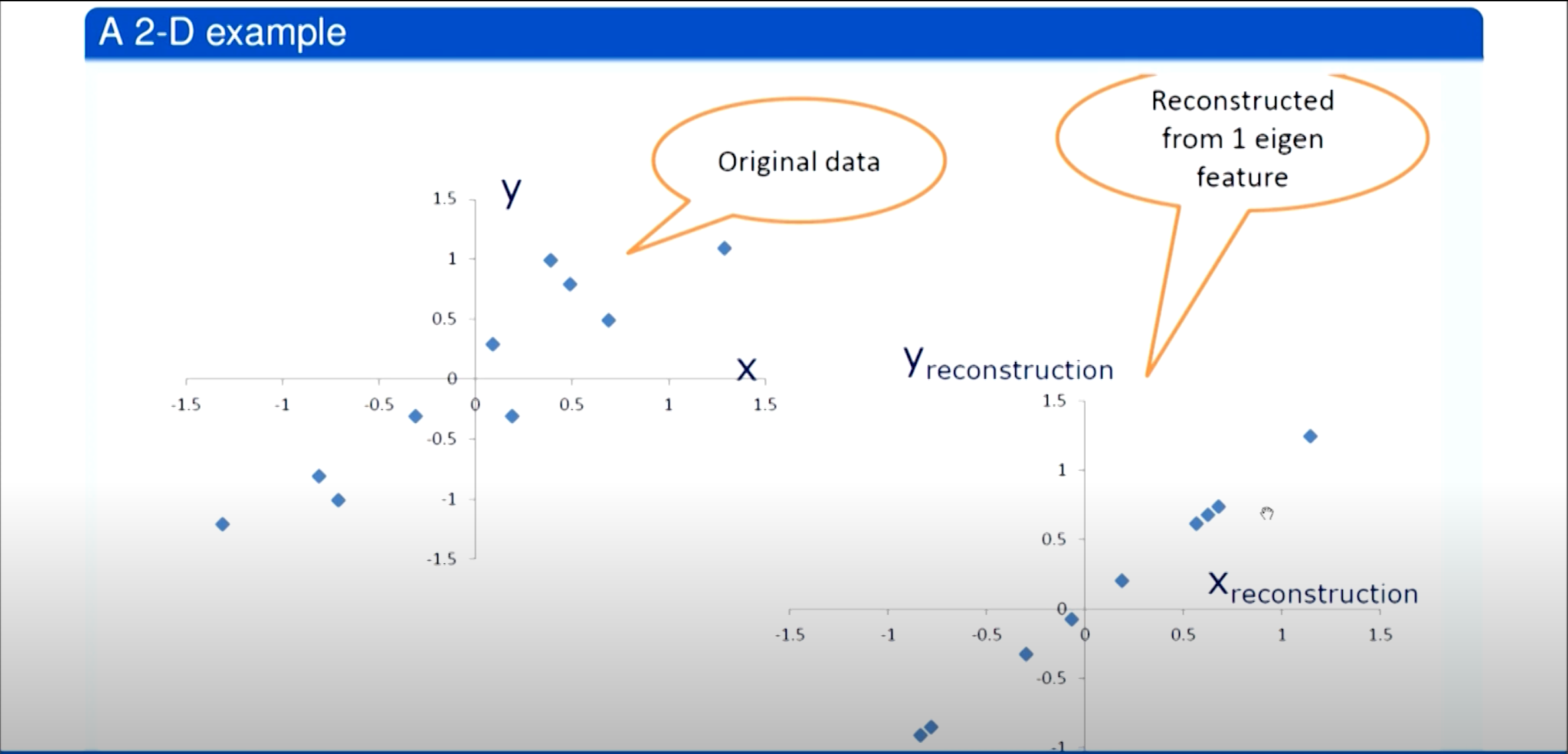
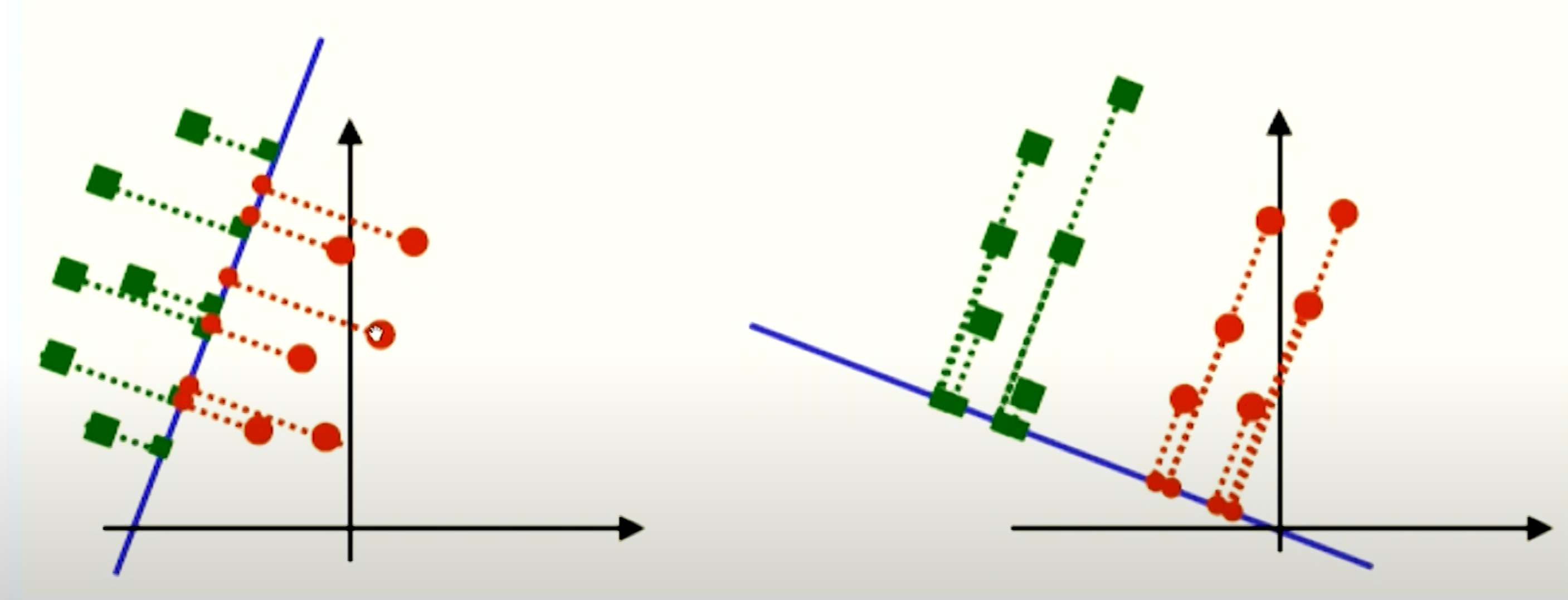
Main idea: Find the projection to a line such that samples from different classes are well separated.
Steps to perform LDA
- Standardize the data.
- Calculate the mean vectors for each class.
- Calculate the within-class scatter matrix.
- Calculate the between-class scatter matrix.
- Calculate the eigenvectors and eigenvalues of the matrix .
- Sort the eigenvectors by decreasing eigenvalues and choose the top k eigenvectors.
- Construct the projection matrix W from the selected k eigenvectors.
- Transform the original dataset X via W to obtain a k-dimensional feature subspace Y.
- The new dataset Y can be used to train a machine learning model.
- The LDA algorithm can be used to reduce the number of features in a dataset.
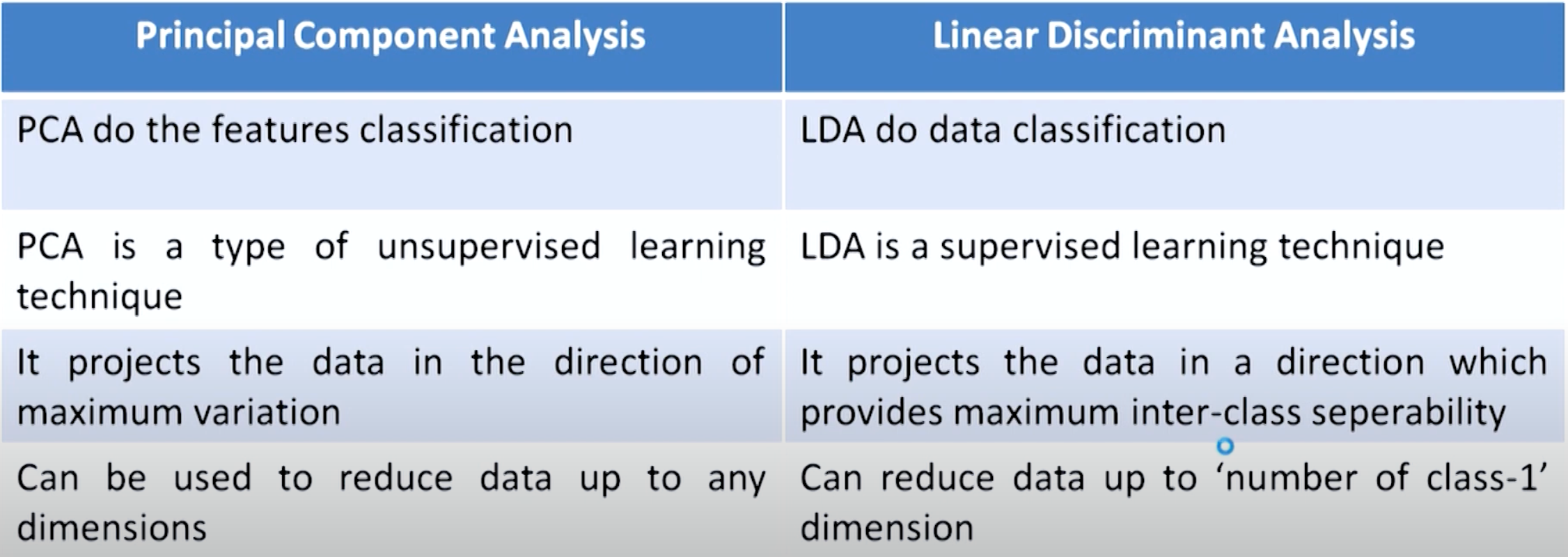
Difference between PCA and LDA